Turn support tickets into governed engineering fixes
The expensive part of a bug is rarely typing the fix — it is the searching, the handovers and the waiting. A customer of your organization reports a problem; FixControl reads the ticket and the bound codebase, proposes a patch as a diff, and runs tests, QA and security checks. Risky changes pause at an approval gate, and delivery is a pull request your team reviews.
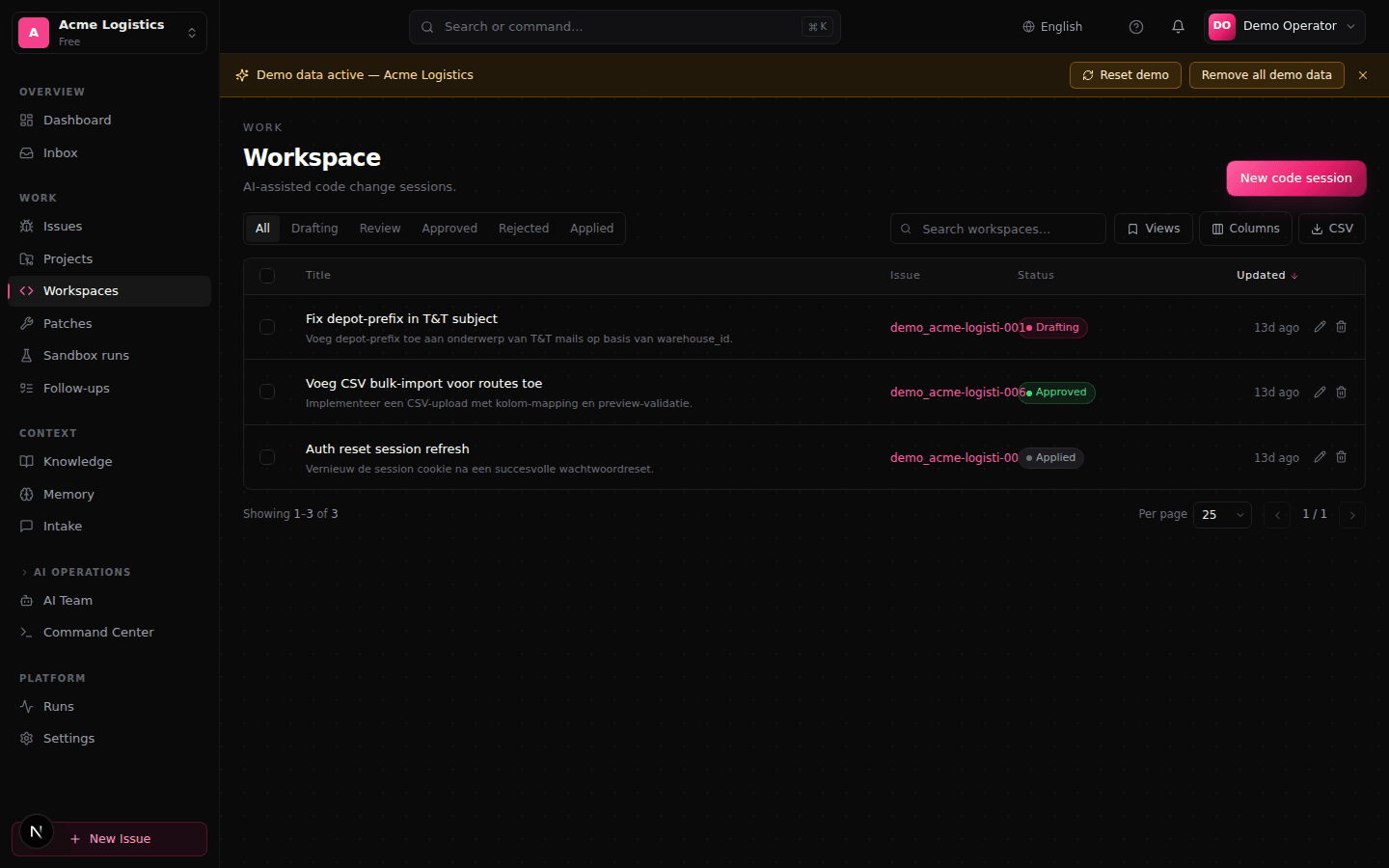
From a ticket to a reviewed, gated patch
Each step produces evidence for the next, and risky steps wait for human approval. The result: a shorter path from customer report to verified fix, with fewer handovers between support and engineering.
- 01The reportA customer of your organization, or someone on your support team, reports a problem
A support conversation turns up what looks like a defect. It is captured in Freshdesk, Jira or as a FixControl issue.
- 02AI missionA mission analyzes the issue and the codebase
FixControl opens a governed mission that reads the ticket alongside the bound codebase. It looks for the likely cause in the actual code paths involved.
- 03Proposed patchIt proposes a patch — a diff to review
The mission drafts a concrete change as a diff. Nothing is merged or shipped at this point; the diff exists for a person to inspect.
- 04ChecksTests, QA and security checks run
The proposed change runs through tests, QA review and security checks. Their results are attached to the patch and travel with it into review.
- 05Approval gatesRisky areas wait for a human gate
Changes that touch sensitive areas — payments, data-loss paths, deployment — pause at an approval gate. Someone on your team decides, on the record, before the change moves forward.
Traceable from customer report to approved change
Every fix keeps its link back to the ticket that prompted it and the person who approved it.
Starts from a real ticket
A remediation begins with an actual support report in Freshdesk, Jira or FixControl. Months later, you can still trace the code change back to your customer’s problem behind it.
The issue and the codebase, read together
The mission reasons over the report and the bound codebase to propose a targeted fix. It addresses the cause in code rather than the symptom in the ticket.
A diff you can review line by line
The output is a concrete diff. Reviewers see exactly what would change before anything is accepted.
Test, QA and security results attached
Automated tests, QA review and security checks run against the proposal. The approver weighs the change with those results in hand.
Approval gates on risky changes
Sensitive areas such as payments, data-loss paths and deployment are gated. Someone on your team approves, on the record, before the change proceeds.
The whole trail, recorded
An operational timeline records who did what and why, from report to mission to patch to approval to PR. An incident review or an audit can replay the sequence.
Patches are proposals until a person accepts them
Questions engineering leaders ask
Does the AI merge or ship code by itself?+
Where does a remediation start?+
What counts as a risky change?+
What evidence does a reviewer see?+
Is there a record of what happened?+
Does FixControl deploy the fix to production?+
See a ticket become a fix
Book a demo and follow one support report through analysis, patch, checks and approval.